Book Your FREE Telephone Consultation
Mr David Allamby
MD, FRCOphth, FRCS

DIRECT ANSWER
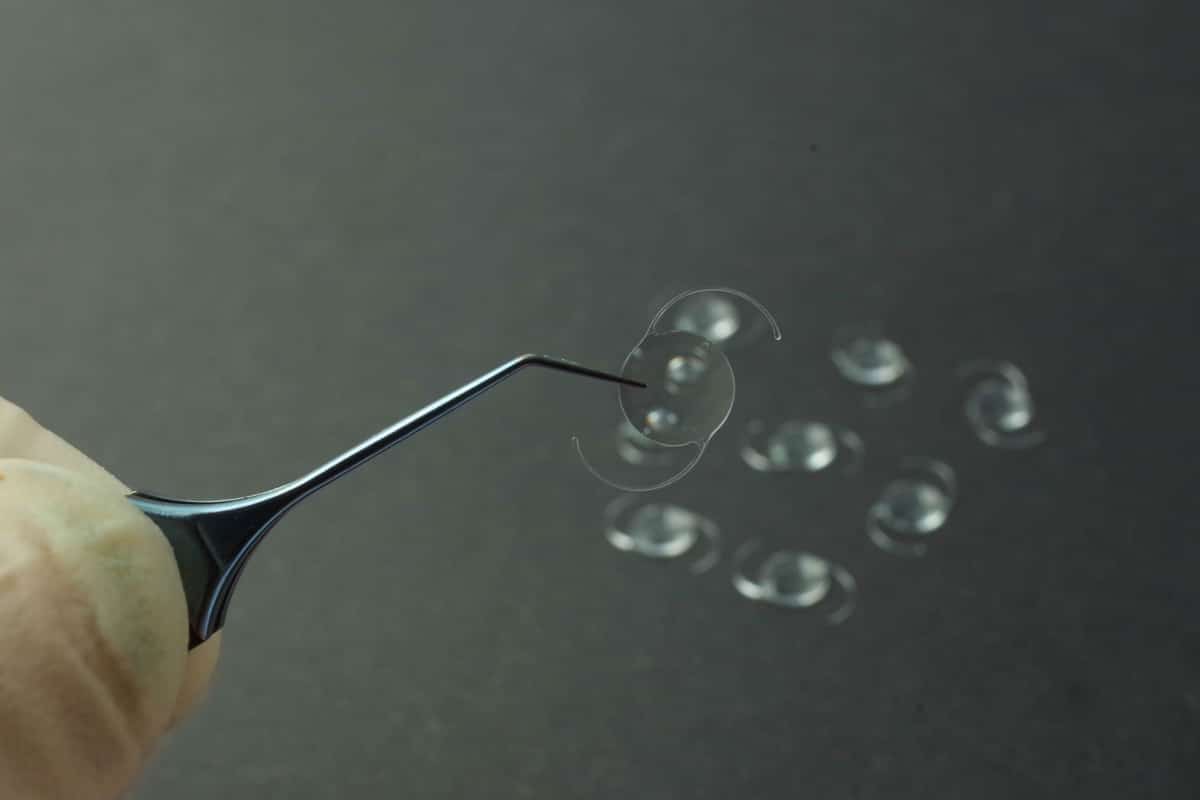
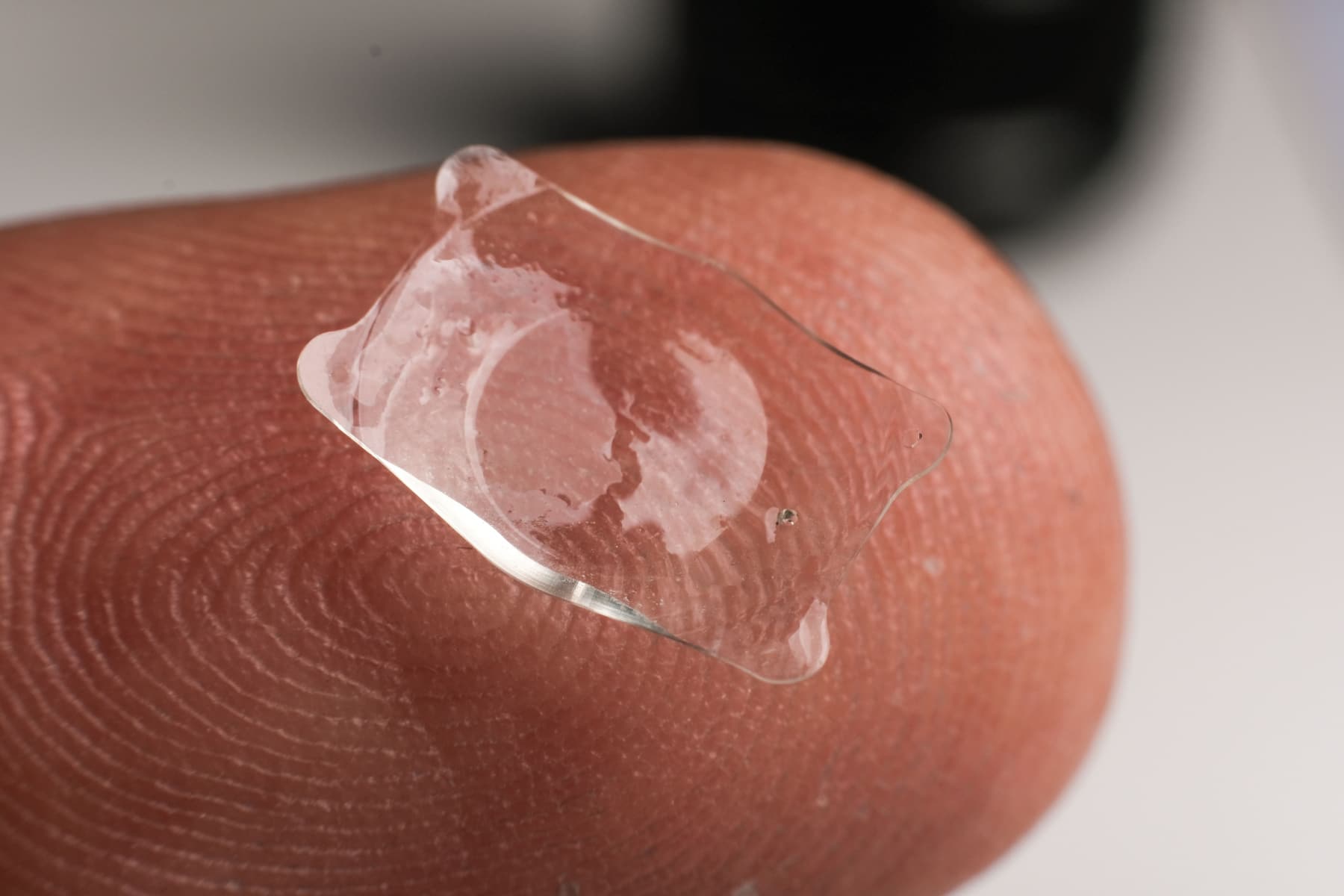
Implantable contact lenses are thin, biocompatible lenses placed inside the eye to correct vision. Also known as implantable collamer lenses, or ICLs, they sit behind the iris and in front of your natural lens. ICL surgery is most often considered for people with high or extreme prescriptions who may not be suitable for LASIK or other laser eye surgery. Unlike a contact lens, an ICL stays inside the eye, cannot be felt once in place, and can remain there permanently.
Implantable contact lenses (ICLs), also known as Implantable Collamer Lenses, are micro-thin, biocompatible lenses positioned inside the eye. The implant is positioned behind the iris and in front of your natural lens.
We most often offer ICL eye surgery in London for people with high or extreme prescriptions (especially myopia or short-sightedness) who may not be suitable for LASIK, SMILE or other forms of laser eye surgery.
Unlike an ordinary contact lens, an ICL is placed inside your eye. You cannot feel it. ICLs can remain there permanently.
We can give you a good idea of your suitability over the phone and schedule you for an initial consultation.
✓ Also known as Implantable Collamer Lenses or phakic IOLs
✓ Placed behind the iris and in front of the natural lens
✓ Often used for high or extreme short-sighted prescriptions
✓ Can be an option when laser eye surgery is not suitable
✓ No corneal tissue is removed
✓ Can remain in the eye permanently
✓ Can be removed or exchanged if medically necessary
The ICL is a tried-and-tested alternative for patients who are not candidates for laser eye surgery because of a high or extreme prescription. It is routinely offered by vision correction surgeons in the UK and worldwide
Suitability criteria for ICL surgery are:
ICLs may also be called phakic intraocular lenses (phakic IOLs) because they are inserted without removing the natural lens. This is different from cataract surgery or refractive lens exchange, where the natural lens is removed and replaced with an artificial intraocular implant.
KEY DATA POINT
For high and extreme short-sightedness, adding a lens can be safer than laser surgery. A Cochrane review comparing phakic intraocular lenses with excimer laser surgery for myopia of -6 to -20 dioptres found that phakic lenses led to less loss of best-corrected vision, better contrast sensitivity and higher patient satisfaction (Barsam & Allan, 2014 [1]).
The Implantable Collamer Lens (ICL Surgery), sometimes called an implantable contact lens, is an alternative for patients who are not candidates for laser eye surgery because of having a high or extreme prescription.

ICL surgery may be suitable if you have a high prescription, stable vision and healthy eyes, but you are not a good candidate for LASIK or another laser procedure.
You may be a suitable candidate if:
Our ICL eligibility guide explains the full criteria in more detail.
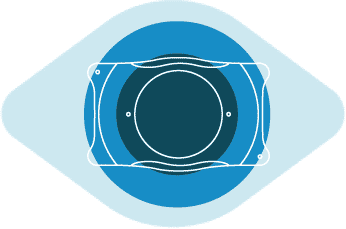
An implantable contact lens works like a contact lens on the front of the eye, providing extra focusing power to correct refractive error. In this case, though, the lens sits inside the eye rather than floating on the surface.
During implantable contact lens surgery, anaesthetic drops numb the eye. A small incision is made in the cornea, and the folded ICL is inserted through it, then positioned behind the iris and in front of the natural lens.
The lens then provides the additional focusing power needed to correct your prescription. Because the natural lens is left in place, this is known as a phakic intraocular lens procedure.
Unlike contact lenses, you cannot feel an ICL inside your eye. The lens can remain permanently, but requires ongoing regular eye-health examinations.
The procedure typically takes about 20 to 30 minutes, with follow-up checks to confirm lens position and intraocular pressure.
ICL surgery can be a useful alternative when your prescription is too high for full laser correction, or when your corneal measurements make LASIK less suitable.
The two procedures correct vision differently. LASIK permanently reshapes the cornea, while ICL surgery places an additional lens inside the eye without removing corneal tissue.
ICL surgery may therefore be considered when:
The right option depends on your prescription, corneal measurements, eye anatomy and overall eye health.
ICLs are designed to remain in the eye long term and are sometimes described as permanent contact lenses. Unlike daily or monthly contact lenses, they do not need to be removed, cleaned or replaced as part of normal use.
Permanent does not mean irreversible. You can remove or replace an ICL later if there is a clinical reason.
You will still need regular eye examinations so the lens position, eye pressure and overall eye health can be monitored.
For suitable patients, ICL surgery can offer several advantages:
KEY DATA POINT
Modern posterior-chamber phakic lenses are accurate and stable over the long term. In a five-year study of a current-generation lens for high myopia, about 92% of eyes were within ±1.00 dioptre of the target, with endothelial cell loss of roughly 6.9% over five years, and seven-year data show the correction stays stable (Cakir et al., 2023 [2]; Kirgiz et al., 2024 [3]).
Vision often improves quickly after ICL surgery, although it may fluctuate during early recovery. You will be given eye drops after surgery, and follow-up appointments will check healing, eye pressure and the position of the implant.
Most patients can return to many everyday activities within a few days, although you should avoid swimming, strenuous exercise and anything that risks contaminating or injuring the eye until your clinical team advises otherwise.
Our ICL recovery and aftercare guide explains what to expect after the procedure in more detail.
ICL surgery is performed inside the eye, so it carries different risks from corneal laser procedures such as LASIK.
Possible issues include temporary inflammation, infection, elevated intraocular pressure, glare or halos, cataract formation, corneal changes (loss of the cells that keep the cornea clear), problems with the position or size of the ICL, and retinal complications.
Your individual risk level depends on your eye anatomy, prescription and overall eye health, which is why detailed screening and ongoing follow-up matter. Careful sizing and case selection, together with regular monitoring, keep these risks low in suitable eyes (Cakir et al., 2023 [2]).
Read our ICL safety and risks guide for a fuller explanation.
A SURGEON'S PERSPECTIVE
ICL surgery is often a very good option for patients with prescriptions that sit outside the range where I would be comfortable recommending LASIK. In those cases, the advantage is that we can correct the vision without removing corneal tissue. The decision is not based on prescription alone. I also look closely at the space inside the eye, the health of the cornea and natural lens, and whether the anatomy gives us enough room to position the ICL safely. If those measurements are right, ICL can deliver excellent visual results while preserving corneal structure.
David Allamby, Medical Director, Focus Clinic
Focus Clinic offers implantable contact lens surgery at its London clinic for suitable patients with high prescriptions, or other reasons why laser eye surgery may not be the best option.
Your assessment looks at more than your glasses prescription. The surgeon also needs to measure the space inside the eye, confirm the health of the cornea and natural lens, and assess whether there is enough room for the ICL to sit safely.
If you are considering ICL surgery, book a free telephone consultation with the Focus Clinic team. We can discuss your prescription, any previous eye surgery advice, and whether implantable contact lenses may be worth exploring before arranging a full assessment.
Book your free consultation.
These answers are written and reviewed by Focus Clinic's chief surgeon, Mr David Allamby MD, who has performed more than 30,000 vision-correction procedures over 25 years. Focus is an Alcon-named Centre of Excellence and European training centre for ray-tracing-guided LASIK.
During an ICL (Implantable Collamer Lens) procedure, the surgeon applies numbing drops and makes a small corneal incision. The surgeon inserts the folded ICL through the incision, positions it behind the iris and in front of the natural lens, then adjusts the lens into place. The procedure takes about 20 to 30 minutes, with vision improvements often noticeable within 1 to 2 days, and the small incision does not require stitches. Afterwards, eye drops are prescribed to help prevent infection, and follow-up visits confirm proper healing.
For people with high prescriptions who are not suitable candidates for laser eye surgery such as LASIK, ICL surgery can be very worthwhile. It can significantly improve vision and reduce or eliminate the need for thick glasses or uncomfortable contact lenses. The procedure is minimally invasive, provides long-term vision correction and can significantly improve quality of life. However, it is more expensive than laser surgery, and eligibility depends on factors such as eye anatomy and health. If you are not sure which treatment is right for you, book a free consultation with our team, and they will be happy to discuss your options.
The term "permanent contact lenses" usually refers to implantable contact lenses, because they can remain inside the eye indefinitely. Unlike a normal contact lens, however, you can still surgically remove or replace an ICL if needed.
No. Once an ICL is correctly positioned behind the iris, you will not be able to feel it inside the eye. Unlike ordinary contact lenses, nothing sits on the surface of the eye, so you don't need to remove, clean or replace the lens each day.
1. Barsam A, Allan BDS. Excimer laser refractive surgery versus phakic intraocular lenses for the correction of moderate to high myopia. Cochrane Database Syst Rev. 2014;(6):CD007679. doi.org/10.1002/14651858.CD007679.pub4
2. Cakir I, Sonmez O, Pehlivanoglu S, et al. Long-term results of a new posterior chamber phakic intraocular lens in patients with high myopia: 5-year results. J Cataract Refract Surg. 2023;49(4):409-415. doi.org/10.1097/j.jcrs.0000000000001110
3. Kirgiz A, Yalcinkaya Cakir G, Cakir I, Yildirim Y, Agca A. Seven-year clinical outcomes after implantation of Eyecryl posterior chamber phakic intraocular lenses for high myopia. Eur J Ophthalmol. 2024;34(5):1424-1431. doi.org/10.1177/11206721241229311
This page provides general information about ICL surgery and is not a substitute for personal medical advice. Prices are indicative and subject to change.

An official Alcon Center of Excellence and European training hub for Ray-Tracing Guided LASIK - the first of its kind in the UK, delivering 20/20 vision in 100% of treated eyes based on published clinical research.
22 Wimpole Street,
London W1G 8GQ, UK
0207 307 8250
100% SUCCESS RATE
10 YEAR GUARANTEE
#1 IN THE UK TRUSTPILOT RATING
CELEBRITIES CLINIC OF CHOICE