
Book Your FREE Telephone Consultation
Mr David Allamby
MD, FRCOphth, FRCS

Prices for laser eye surgery in our London clinic start from £4,400 for both eyes
Book Your FREE
Telephone Consultation
We can give you a good idea of your suitability over the phone and schedule you for an initial consultation.
Prices for laser eye surgery in our London clinic start from £4,800 for both eyes
Book Your FREE
Telephone Consultation
We can give you a good idea of your suitability over the phone and schedule you for an initial consultation.
Prices for laser eye surgery in our London clinic start from £4,800 for both eyes
Book Your FREE
Telephone Consultation
We can give you a good idea of your suitability over the phone and schedule you for an initial consultation.
We offer Ray-Tracing Guided LASIK, LASIK and LASEK at our London clinic, alongside our lens replacement surgeries.
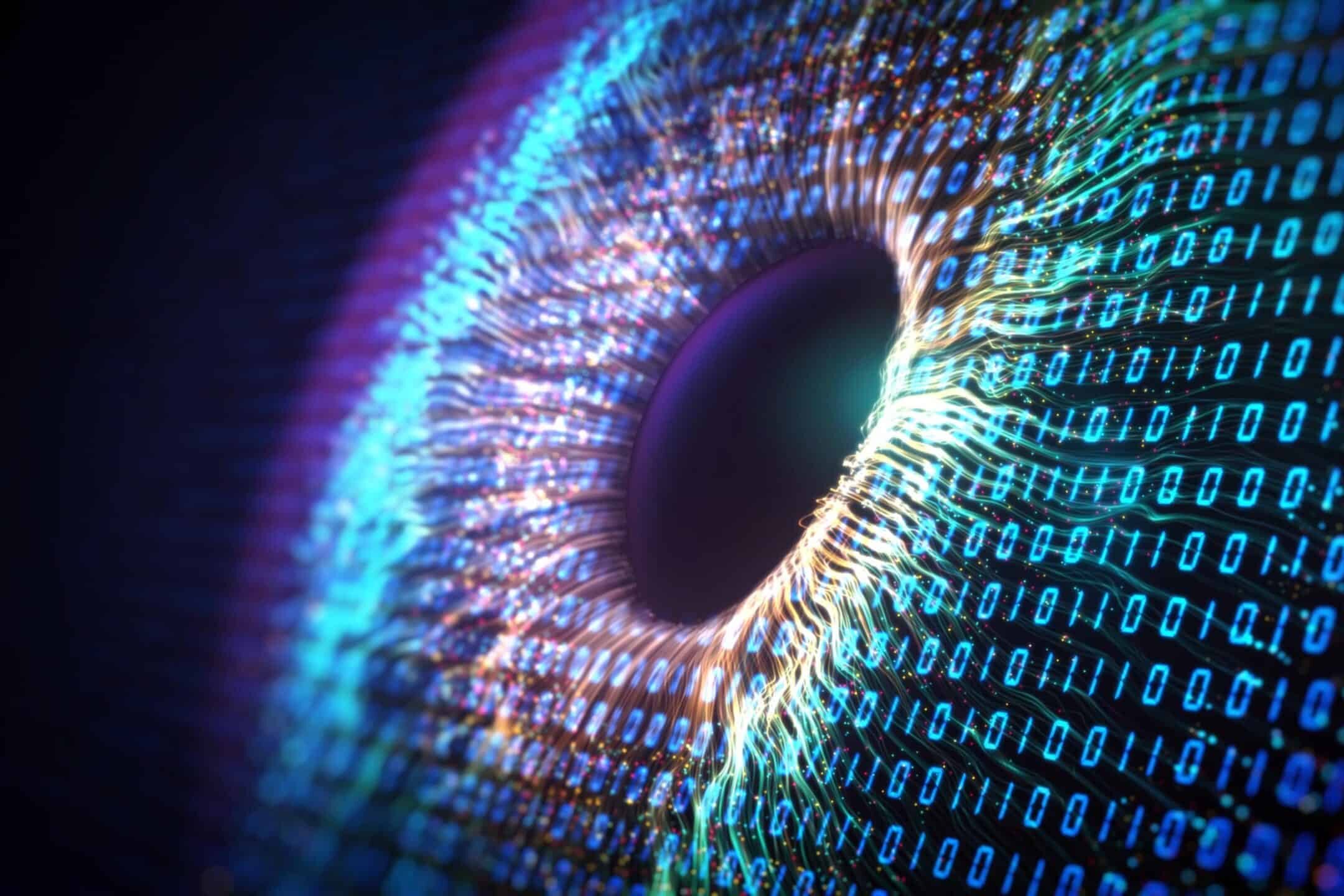
Ray-Tracing Guided LASIK is a fully customised laser vision correction surgery that uses 3D ray‐tracing technology to scan each eye for a completely personalised outcome and significantly improved vision.
Focus Clinics is the only UK clinic offering Ray-Tracing Guided LASIK.
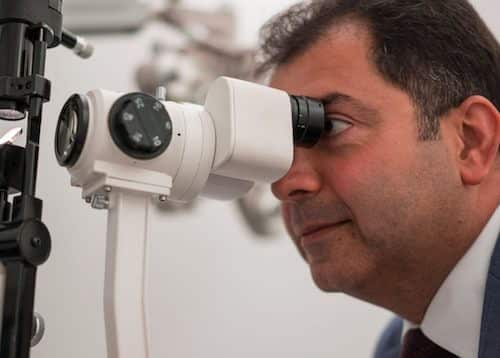
LASIK eye surgery (Laser-Assisted In-Situ Keratomileusis) is the most widely used laser eye surgery used to correct short-sight, long-sight, astigmatism, and presbyopia (the need for reading glasses).
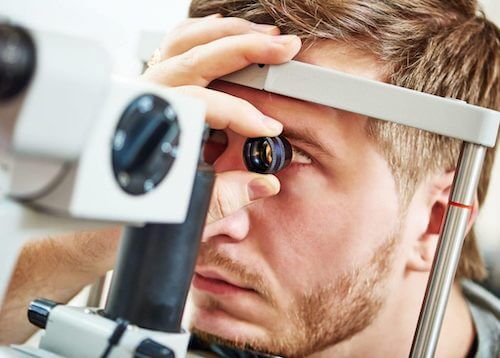
LASEK and PRK reshape the cornea to correct abnormalities in focus, just like with LASIK. The difference with LASEK is that no flap is made in the cornea, which can make surface laser treatment an option for some patients who are not suited to LASIK.
Laser eye surgery, also known as laser eye treatment or refractive surgery, uses a laser to reshape the cornea so light focuses correctly on the retina. For suitable candidates, it offers freedom from glasses and contact lenses in everyday life.
Laser eye surgery can take anywhere from a few seconds to a few minutes per eye, depending on the level of correction needed, and can correct short-sightedness, long-sightedness, astigmatism and age-related close-up vision loss, known as presbyopia.
We’re going to break down exactly what laser eye surgery is here.
You may be suitable for laser eye surgery if your prescription is stable, your corneas are healthy, and your eyes are otherwise in good condition. The only way to know for certain is through a full consultation and detailed eye scans.
At Focus Clinics, we assess your prescription, corneal thickness and shape, eye health and any issues such as dry eye before recommending treatment. If laser eye surgery is not the right option for you, we will tell you.
Choosing a laser eye surgery clinic is about more than price. It comes down to the experience of the surgeon, the quality of the screening, the technology used and the aftercare you receive.
Focus Clinics was the first clinic in the UK to offer Ray-Tracing Guided LASIK and is an Alcon-named Centre of Excellence and European training centre for the technology. Our chief surgeon, Mr David Allamby, has performed more than 30,000 procedures over 25 years.
We assess every patient carefully before treatment, and if laser eye surgery isn't right for you, we will tell you. Laser treatment of short-sightedness is also backed by a 10-year guarantee and Lifetime Aftercare.
Laser eye surgery has a strong safety record, but like any surgical procedure, it is not completely risk-free. Careful screening before treatment is one of the most important ways to reduce the chance of complications.
At Focus Clinics, we assess your corneal health, prescription, tear film and overall eye health before recommending surgery. If there are signs that treatment would not be appropriate, we will advise against it.
Possible side effects can include dry eye, temporary night-vision changes and some regression over time. The risks vary depending on the procedure and your individual eyes, which is why the consultation and screening process matter so much.
At Focus Clinics, our team has over 70 years of combined industry experience and has completed over 60,000 successful surgeries.
Want to see real reactions from real people, just moments after they've had laser eye surgery?
Laser eye surgery at Focus Clinics starts from £4,400 for both eyes. The exact cost depends on the treatment recommended following your consultation.
Your treatment includes your assessment, time with your surgeon and ongoing aftercare. Focus Clinics also offers a 10-year guarantee (laser treatment of short-sightedness) and Lifetime Aftercare.
Flexible finance is available from £44.50 per month
We offer a number of vision correction treatments at our London Clinic.
We can give you a good idea of your suitability over the phone and schedule you for an initial consultation.
Focus Clinic, London. Answers reviewed by our chief surgeon, Mr David Allamby MD, who has performed more than 30,000 laser eye surgery procedures over 25 years.
Focus is an Alcon-named Centre of Excellence and European training centre for ray-tracing-guided LASIK.
You can have laser eye surgery from the age of 18, once your prescription has settled, and there is no strict upper age limit as long as your eyes are healthy. The real deciding factor is a stable prescription, not your date of birth.
Below 18, the eyes are still developing, and the prescription usually keeps changing, so we wait until it has been stable for at least one year. Many clinics accept -0.50 increases in the past year, but that’s too much. Most of our patients are treated from their early twenties onwards, when vision has settled, and there are decades of glasses-free years ahead to enjoy.
Your twenties and thirties are the ideal window: a steady prescription, healthy eyes and the most years to benefit from the result. From your mid-forties, we will also talk about reading vision, because presbyopia, the natural ageing of the lens, affects everyone. Blended Vision, where one eye is set slightly for near, can reduce your reliance on reading glasses. From around 60, early changes in the lens often make a lens replacement (refractive lens exchange, RLE) a better choice than laser. (Hecht et al., 2019)
Our chief surgeon, Mr David Allamby, has treated patients from 18 all the way up to their sixties across more than 30,000 procedures, and finds that eye health and a stable prescription matter far more than age itself.
Age very rarely rules you out. More often, it simply guides which procedure suits you best, which is why a full assessment, rather than a birthday, gives you the real answer.
For most patients, the correction itself is permanent, because the laser reshapes the cornea for good. For the majority of mild to moderate myopia prescriptions, it should last a lifetime. Higher prescriptions are prone to some regression over the years, which (for short-sight) is covered by our 10-year guarantee.
“Permanent” still needs one honest caveat, because laser eye surgery can, for some patients, lose some of the benefit over time. A minority of people see a slight drift back over the years, called regression, which is more likely with stronger prescriptions. By 20 years after the surgery, about 20% or so can experience some regression. Even then, most only lose around a quarter of the original correction, and it can usually be fine-tuned with an enhancement if enough corneal tissue remains. (Hickenbotham et al., 2023)
Regression is different from needing an early enhancement to fine-tune the initial correction, usually around 6 months later. With modern ray-tracing-guided LASIK, published research puts this enhancement rate as low as around 1 in 400 (He and Bala, 2023).
For short-sighted patients, any enhancement is covered by our 10-year guarantee, so if your eyes drift within that time, we put it right at no extra cost. Long-sighted prescriptions naturally progress with age and are not covered by the guarantee, but every Focus patient receives Lifetime Aftercare, so we continue to look after your eyes for as long as you have them.
The one thing no laser can change is presbyopia, the need for reading glasses from your mid-forties. That is normal ageing, not the surgery wearing off. Our chief surgeon, Mr David Allamby, after more than 30,000 procedures, sums it up simply: ”The correction is usually permanent, but your eyes keep living, so we plan for both.”
For the great majority of suitable patients, yes. Modern lasers achieve 20/20 vision or better in around 95% of suitable patients, and with ray-tracing-guided LASIK, published research reports 100% of treated eyes reaching 20/20 or better (He and Bala, 2023).
“Suitable” is the key word. A stable, in-range prescription and a healthy cornea are the foundations, which is why thorough screening matters so much. Get that right, and the odds are strongly in your favour across LASIK, PRK and SMILE. (Gomel et al., 2018)
The bar has kept rising, and our own results show how. In research we published in 2015, 100% of patients could see 20/20 with both eyes open, and 96.9% reached 20/20 in each eye on its own, across 887 eyes (Ziaei, Mearza and Allamby, 2015).
Ray-tracing-guided LASIK has since gone further: by building a high-resolution digital twin of your eye and testing the treatment before surgery, independent studies now report 100% of individual eyes reaching 20/20 or better, with around 98-99% satisfaction (He and Bala, 2023; Yang et al., 2026). Where excellent LASIK once needed both eyes working together to reach 20/20, ray-tracing now gets there eye by eye.
Compare ray-tracing LASIK to SMILE. A recent multi-centre study of the latest SMILE Pro showed it achieved 20/20 or better in 93.2% of eyes, for similar prescription ranges to the He & Bala study. Ray-tracing LASIK consistently achieves a 100% 20/20 or better rate. (Sekundo et al., 2025)
It helps to remember that 20/20 is a baseline. Many patients see better than 20/20, and ray-tracing protects night vision at the same time, so contrast and low-light quality are preserved rather than reduced. Our chief surgeon, Mr David Allamby, after more than 30,000 procedures, sets a realistic target for your individual eyes rather than quoting an average. When you compare clinics, ask for both their 20/20 rate and their better-than-20/20 rate.
There is no single “best” laser eye surgery company for everyone. The best clinic for you is the one that combines an experienced surgeon, thorough screening, the latest technology, genuine long-term aftercare and consistently strong independent reviews. Price should be near the bottom of that list, not the top.
Judge a clinic on five things.
1. The surgeon: how experienced are they, and will they personally perform your treatment?
2. The screening: a good clinic is willing to say “No” to patients who are not suitable, rather than treating everyone who walks in.
3. The technology: ray-tracing-guided treatment now gives significantly better results, so look for a clinic that offers it.
4. The aftercare: how long are you looked after, and is a future enhancement included? Many clinics only offer one year of aftercare. We offer Lifetime Aftercare and 10 years of free enhancements for short-sightedness.
5. The reviews: read Trustpilot and Google, and look closely at how a clinic handles its rare unhappy patients, not just its five-star ratings.
So rather than asking which company is “best”, ask which clinic gives you the right surgeon, the right technology and genuine aftercare for your eyes. Get those right, and you are choosing a long-term relationship, not a one-off price.
The laser treatment itself takes only seconds per eye. Most patients are in the laser room for around 15 to 20 minutes for both eyes, and we suggest allowing about two hours at the clinic for the whole visit.
The numbers behind that surprise most people. The laser reshaping takes roughly 5 to 15 seconds per eye. Creating the LASIK flap with the femtosecond laser adds about 20 to 30 seconds, and SMILE is similar. Altogether, that is around 5 to 6 minutes per eye, or about 10 to 12 minutes of actual surgery within your visit. Ray-tracing-guided treatment adds only 1 to 2 minutes, during which we test the plan on the digital twin of your eye.
The rest of the appointment is not surgery at all. It is the careful part: repeating a few checks and scans, confirming your consent, explaining your drops and aftercare, the treatment itself, and a short rest before you head home. You are awake throughout; there is no fasting and no general anaesthetic, and numbing drops mean you feel pressure rather than pain.
Our chief surgeon, Mr David Allamby, after more than 25 years as a laser eye surgeon, often reminds nervous patients that the part they dread, the laser, is comfortably the shortest part of the day.
So while you should set aside a couple of unhurried hours, the surgery that actually changes your vision is measured in minutes, and the reshaping itself in seconds.
No, laser eye surgery is not painful. Your eye is numbed with anaesthetic drops, with no injection and no needle anywhere near it, so during LASIK and SMILE you feel pressure rather than pain. Surface treatments (PRK, also called LASEK) are more sore, often painful, for the first two to three days.
Here is what you actually feel. The drops may sting for a second as they go in, then nothing sharp. During the LASIK flap step, there are around 20 to 30 seconds of firm pressure while your vision dims, which most people describe as odd rather than uncomfortable. You do not feel the excimer laser reshaping the cornea, though you may notice a faint smell and a soft buzzing sound. Afterwards, with LASIK and SMILE, expect a few hours of grittiness and watering, like an eyelash under the lid, which then settles.
We will always be honest about PRK: the first few days are genuinely sore while the surface heals, and we tell you that upfront so you can plan for it. (Steigleman et al., 2022)
The real hurdle is almost never pain. It is nerves. Our chief surgeon, Mr David Allamby, finds that anticipation trips up far more people than any discomfort, and it is the most manageable part of all: we talk you through each step, you can listen to your own music, bring someone to hold your hand, or take a mild sedative such as diazepam beforehand.
Most patients tell us it was easier than a trip to the dentist.
For most suitable patients, laser eye surgery is worth it, and cheaper in the long term. However, it is a personal decision and a genuine investment, so it deserves a direct answer rather than a sales pitch.
Start with the money, because the comparison is not the one most people make. Weighed against a lifetime of glasses, prescription sunglasses, contact lenses and solutions, replaced for decades, surgery often works out as the cheaper option, and several independent studies agree. (Berdeaux et al., 2002; Foo et al., 2021)
Contact lenses also carry a quiet, ongoing risk: showering in them raises your risk of a corneal ulcer several times over, and sleeping in them far more. A one-off, properly screened procedure with an expert surgeon takes your risk down, not up.
Then there is the result. In published research on ray-tracing-guided LASIK, 100% of treated eyes reached 20/20 vision or better (He and Bala, 2023), and every treatment at Focus is backed by our 10-year guarantee. Most patients, though, talk less about the numbers and more about the freedom: waking up and simply seeing, swimming, sport, holidays and picking up the children without reaching for glasses. (Solomon et al., 2009)
It is not right for everyone, and, if that is you, we will say so. If you barely wear correction, if the scan says you are not suitable, or if your eyes are very dry, glasses may be the best option.
Our chief surgeon, Mr David Allamby, after nearly three decades of laser eye surgery, puts it plainly: “For the right person, this is some of the best value in medicine. If you are the wrong person, we will tell you.”
Laser eye surgery reshapes the clear front window of your eye, the cornea, so that light focuses precisely on the retina. By changing the cornea’s curvature by microscopic amounts, we can correct short-sight, long-sight and astigmatism, usually in a single, painless procedure.
The reshaping is done by a cool-beam excimer laser, which removes tissue not by burning but by breaking molecular bonds with extraordinary precision. How we reach the tissue depends on the procedure. In LASIK, a femtosecond laser creates a very thin (human hair-thin), hinged flap, which is folded back so the cornea can be reshaped underneath, then laid back to heal without stitches. In PRK, or LASEK, the surface layer is gently moved aside and regrows over a few days. In SMILE, a femtosecond laser makes multiple cuts and your surgeon pulls out a small disc of tissue through an opening. (Bastawrous et al., 2011)
The biggest advances are in the planning, not just the laser. With ray-tracing-guided treatment, we build a high-resolution 3D “digital twin” of your eye from around 140,000 data points, then trace roughly 2,000 rays of light through it to design the ideal treatment for both day and night vision, before we ever touch the real eye. At Focus, we use the Alcon WaveLight EX500 laser with the Sightmap scanner. (He and Bala, 2023)
Our chief surgeon, Mr David Allamby, after more than 25 years of laser eye surgery, puts it this way: “The procedure’s name tells you the method, but the technology and the surgeon decide the result.”
You are likely to be suitable if your prescription is stable and within the treatable range, your corneas are healthy and thick enough, and your eyes are otherwise healthy. Only a full consultation with detailed corneal scans can confirm it for certain.
We check several things. Your prescription should have been stable for one to two years, because treating a moving prescription lets your own eyes undo the result. It also needs to be in range: we can treat short-sight to about -8, sometimes -10 dioptres (beyond that, an implantable contact lens is often better), long-sight to around +3, and astigmatism to about 6 dioptres. Your cornea matters just as much as the number: its thickness and shape decide what is safe, and only a high-resolution scan, such as a Pentacam or MS39, reveals it. Finally, your eyes must be healthy, and the most common issue we find is dry eye, which patients often do not know they have. (Wilkinson et al., 2017)
The most important safeguard is a clinic willing to say “No”. Our chief surgeon, Mr David Allamby, approaches every assessment by asking “Why shouldn’t I treat this person?”, and after more than 30,000 procedures, that habit of screening people out is exactly what keeps results excellent.
A 30-second online quiz cannot see your cornea. If you are considering surgery, dig out your old prescriptions and book a proper consultation with scans, because that is the only genuine way to know.
Modern laser eye surgery is one of the most studied and safest elective procedures in medicine, with decades of data and millions of treatments behind it. Most of your safety, though, is decided before the laser is ever switched on, through rigorous pre-operative screening and the right surgeon and technology.
Serious complications have become genuinely rare. Over the past 25 years, the risk of infection has fallen more than 10-fold to roughly 1 in 43,000, and corneal weakening (ectasia) 20-fold to around 1 in 3,300, largely because modern scanners now detect the subtle problems that once slipped through.
When issues do arise, they are usually the three most common ones: night-vision symptoms, dry eye and regression, and each now has options. Ray-tracing-guided treatment has largely removed night-vision problems at Focus; dry eye is treated aggressively before surgery; and regression can be fine-tuned with an enhancement.
The single most important safeguard is screening, including the willingness to turn a patient away. If a patient’s eyes are very dry, or a scan shows a borderline cornea, the safest treatment is sometimes no treatment at all. (Castro-Luna et al., 2020)
Our chief surgeon, Mr David Allamby, has performed 30,000 procedures over 25 years, and his approach is consistent: safety is not the same for everyone, and it is not a matter of luck. You choose it through the surgeon, the technology and the depth of the screening, not through the lowest price.
Bastawrous A, Silvester A, Batterbury M. Laser refractive eye surgery. BMJ. 2011;342:d2345. doi.org/10.1136/bmj.d2345
Berdeaux G, Alio JL, Martinez JM, Magaz S, Badia X. Socioeconomic aspects of laser in situ keratomileusis, eyeglasses, and contact lenses in mild to moderate myopia. J Cataract Refract Surg. 2002;28:1914-1923. doi.org/10.1016/S0886-3350(02)01496-7
Castro-Luna G, Jimenez-Rodriguez D, Perez-Rueda A, Alaskar-Alani H. Long-Term Follow-Up Safety and Effectiveness of Myopia Refractive Surgery. Int J Environ Res Public Health. 2020;17:8729. doi.org/10.3390/ijerph17238729
Foo LL, Lanca C, Wong CW, Ting DSW, Lamoureux E, Saw SM, Ang M. Cost of myopia correction: a systematic review. Front Med (Lausanne). 2021;8:718724. doi.org/10.3389/fmed.2021.718724
Gomel N, Negari S, Frucht-Pery J, Wajnsztajn D, Strassman E, Solomon A. Predictive factors for efficacy and safety in refractive surgery for myopia. PLoS One. 2018;13:e0208608. doi.org/10.1371/journal.pone.0208608
He G, Bala C. Ray-tracing-guided myopic LASIK: real-world clinical outcomes. J Cataract Refract Surg. 2023;49(11):1140-1146. doi.org/10.1097/j.jcrs.0000000000001286
Hecht I, Achiron A, Ben Haim LN, Sorin V, Mimouni M, Kaiserman I. Refractive surgery in the late adulthood and adolescent age groups. Graefes Arch Clin Exp Ophthalmol. 2019;257:2057-2063. doi.org/10.1007/s00417-019-04396-x
Hickenbotham AL, Tanehsakdi M, Chansue E. Long-Term Safety Results of LASIK Refractive Surgery: A Twenty-Year Retrospective Study. J Surg Res. 2023;6(3):303-309. doi.org/10.26502/jsr.10020314
Sekundo W, Chang JSM, Ganesh S, Hjortdal J, Wiltfang R. Keratorefractive lenticule extraction for myopia and myopic astigmatism with the VISUMAX 800: 6-month outcomes of a prospective multicentre post-market clinical follow-up study. J Refract Surg. 2025;41(3):e264-e271. doi.org/10.3928/1081597x-20250204-03
Solomon KD, Fernandez de Castro LE, Sandoval HP, et al. LASIK world literature review: quality of life and patient satisfaction. Ophthalmology. 2009;116(4):691-701. doi.org/10.1016/j.ophtha.2008.12.037
Steigleman W, Rose-Nussbaumer J, Al-Mohtaseb Z, Santhiago M, Lin CC, Pantanelli SM, Kim SJ, Schallhorn J. Management of Pain after Photorefractive Keratectomy: A Report by the American Academy of Ophthalmology. Ophthalmology. 2022. doi.org/10.1016/j.ophtha.2022.07.028
Wilkinson JM, Cozine EW, Kahn AR. Refractive eye surgery: helping patients make informed decisions about LASIK. Am Fam Physician. 2017;95(10):637-644. PMID 28671403
Yang L, Luo L, Zhang Y, et al. Ray-tracing-guided femtosecond LASIK: refractive outcomes, visual quality and patient satisfaction. Clin Ophthalmol. 2026;20. doi.org/10.2147/OPTH.S574112
Ziaei M, Mearza AA, Allamby D. Wavefront-optimized laser in situ keratomileusis with the Allegretto Wave Eye-Q excimer laser and the FEMTO LDV Crystal Line femtosecond laser: 6 month visual and refractive results. Cont Lens Anterior Eye. 2015;38(4):245-249. doi.org/10.1016/j.clae.2015.02.004
* 100% 20/20 success is from our peer-reviewed published results for LASIK binocular vision treating short-sight up to -6.00 dioptres including up to 2.00 dioptres of astigmatism.
**J Cataract Refract Surg. 2023 Nov 1;49(11):1140-1146. Ray-tracing-guided myopic LASIK: real-world clinical outcomes. George He, Chandra Bala


100% SUCCESS RATE
10 YEAR GUARANTEE
#1 IN THE UK TRUSTPILOT RATING
CELEBRITIES CLINIC OF CHOICE

Registered in England 4585464
Focus Clinic © 2025